
Japanese Yen Intervention: MUFG Believes Japan Is Still Far From Finished Intervening
 May 12, 2026 · Nitsan
MUFG Warns Intervention Risk Remains High
The Japanese yen continues to remain at the center of attention in the foreign exchange market, as major Japanese bank MUFG believes the risk of another intervention by the Japanese government remains extremely high.
MUFG, or Mitsubishi UFJ Financial Group, is considered one of the largest and most influential financial institutions in Japan and globally. The bank closely follows the Japanese foreign exchange market and the policies of both the Ministry of Finance and the Bank of Japan.
Japan Has Already Intervened Twice This Month
As we discussed in previous articles, Japan has most likely already carried out two foreign exchange interventions this month, with market estimates suggesting that each intervention was worth approximately 35 billion dollars.
The interventions came after USDJPY climbed slightly above the 160 area, a level considered highly sensitive by Japanese authorities.
Following the intervention, the price dropped rapidly from above 160 toward the 155 area, but in recent days USDJPY has started attempting to climb back toward 158.
Technically Japan Needs To Maintain A Bearish Structure
From a technical perspective, if Japan wants to maintain a bearish price structure and break the bullish momentum in USDJPY, many traders believe the pair needs to start moving lower from current levels.
Analysts and forex traders also understand the psychological importance of the situation for the Japanese government.
After such massive interventions, a scenario where USDJPY immediately rallies again and breaks above 160 to new highs could make the Japanese intervention appear weak and ineffective in the eyes of the market.
For this reason, many traders continue to believe the probability of another intervention remains high, especially if USDJPY continues climbing aggressively.
The Aggressive Message Coming From Tokyo
One of the key figures regarding Japanese foreign exchange intervention is Atsushi Mimura, Japan’s Vice Minister of Finance for International Affairs.
Recently, Mimura delivered particularly aggressive messages to the market.
According to reports, he clarified that Japan has no limitation on the number of times it can intervene in the foreign exchange market if necessary, and that authorities are prepared to take the required measures to deal with excessive speculative currency moves.
In addition, he emphasized that Japan is monitoring the foreign exchange market with an extremely high sense of urgency.
Markets tend to take such statements very seriously, especially after the latest interventions.
A Rate Hike Is Also Entering The Picture
At the same time, markets are increasingly expecting another possible interest rate hike in Japan next month.
After several Bank of Japan members already voted in favor of a rate hike during the previous meeting, traders are beginning to price in the possibility that rates could rise again soon.
Such a move could provide additional support for the Japanese yen and increase pressure on aggressive long USDJPY positions.
Support From The United States
Another factor attracting market attention is the recent meeting between senior Japanese officials and the US Treasury Secretary.
According to market estimates, Japan appears to have received at least some level of understanding or tolerance from the United States regarding its currency interventions.
This means the market currently does not see strong American opposition to Japanese intervention in the foreign exchange market, which could give Tokyo more confidence to continue acting if necessary.
A Sharp Red Candle Again Raises Intervention Suspicions
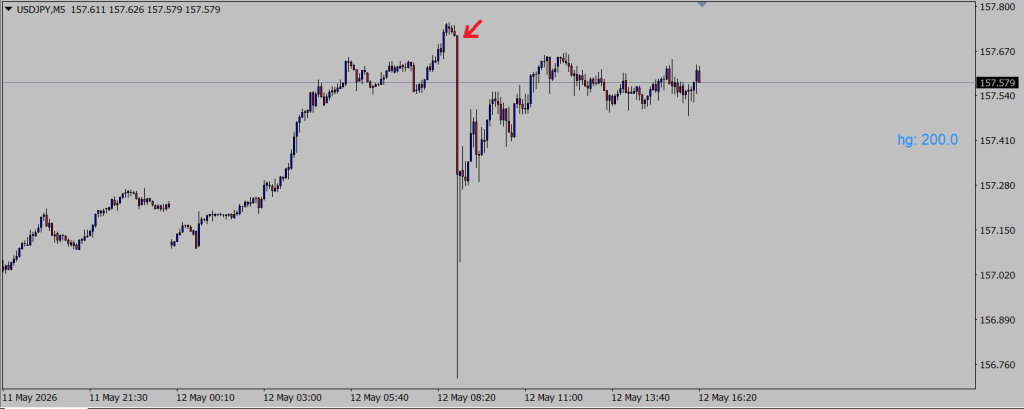
Today, traders also witnessed another unusual move in USDJPY, as a sharp and aggressive red candle suddenly appeared during trading.
Many forex traders immediately viewed the move as suspicious, especially considering that similar price behavior appeared near the previous Japanese interventions.
The market is now trying to determine whether this was simply normal volatility or another signal that Japanese authorities may still be active behind the scenes attempting to limit further USDJPY upside.
Are We Heading Toward Another Major Decline In USDJPY?
At the moment, the main question for forex traders is whether USDJPY will once again attempt to climb toward 160, or whether a new wave of declines could begin from current levels.
From a technical perspective, as long as the pair struggles to break higher in a stable manner, many traders continue seeing elevated risk for sharp downside spikes and renewed pressure from Japanese authorities.
Conclusion
Despite the sharp decline that followed the recent interventions, the risk of another Japanese yen intervention remains very high according to market expectations.
Investors are now trying to determine whether Japan will succeed in maintaining pressure on USDJPY and prevent another break above 160, or whether the market will continue testing the determination of Japanese authorities.
It is important to emphasize that this article does not constitute a recommendation to buy, sell or perform any action in the foreign exchange market. The article reflects technical analysis, personal opinion and market interpretation only.
Disclaimer: This article does not constitute investment advice, financial advice or a substitute for independent judgment. The information provided is for educational and informational purposes only.


