USD/JPY After the Largest Intervention in History: Is Another Major Decline Ahead for the Yen?
 June 16, 2026 · Nitsan

The Japanese Yen faces a critical moment as traders assess the impact of historic market intervention and future monetary policy decisions.
The Largest Currency Intervention on Record
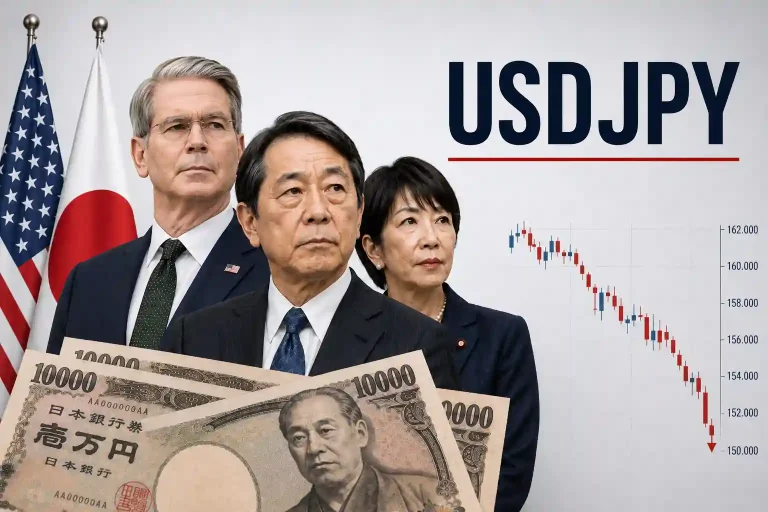
Following the latest intervention by Japanese authorities in the foreign exchange market, USD/JPY experienced a sharp decline, forming a large bearish move in a very short period of time. However, similar to previous episodes, the pair quickly resumed its upward trend.
According to market estimates, the latest intervention amounted to approximately $73 billion, making it the largest currency intervention ever recorded. This exceeds the interventions carried out in both 2022 and 2024.
What Does History Suggest?
A look back at previous interventions reveals an interesting pattern.
In both 2022 and 2024, USD/JPY declined sharply on the day of the intervention but later recovered and eventually reached new highs. Only after establishing those new highs did the pair experience a much larger decline, exceeding the initial intervention-day move.
Based on these historical patterns, we currently see two possible scenarios.
The first scenario is a direct decline from current levels.
The second scenario is a repeat of previous intervention cycles, where USD/JPY first reaches a new high before entering a more significant downward move.
It is important to emphasize that this is simply our interpretation of historical market behavior, and there is no guarantee that history will repeat itself.
Japanese Officials Continue to Issue Warnings
At the same time, Japanese authorities continue to deliver firm messages to the market, emphasizing that they are closely monitoring currency movements.
Senior officials from the Ministry of Finance and the central bank have repeatedly stated that they are prepared to take appropriate action in response to excessive volatility or speculative moves in the foreign exchange market.
Japan’s top currency diplomat, Atsushi Mimura, recently stated that authorities are monitoring the foreign exchange market with a “high sense of urgency,” a message widely interpreted as another warning to traders testing the limits of policymakers’ tolerance.
Why We Prefer CHF/JPY

Another important factor to consider is the cost of holding positions.
Short positions in USD/JPY typically incur negative swap costs. For this reason, we personally prefer expressing our bearish view through short positions in CHF/JPY, where swap rates for short positions remain positive.
All Eyes on the Bank of Japan Rate Decision
Tomorrow, the Bank of Japan is expected to announce its latest interest rate decision, with markets currently pricing in a 0.25% rate hike from 0.75% to 1.00%.
If expectations are met, this would bring Japanese interest rates to their highest level since 1995.
However, beyond the rate decision itself, investors will be primarily focused on the Bank of Japan’s statement and the governor’s remarks following the announcement.
Foreign exchange traders will be looking for clues regarding whether the central bank intends to continue raising rates later this year and how concerned policymakers are about yen weakness and ongoing volatility in the currency market.
The guidance provided after the decision could prove even more influential than the rate hike itself and may play a key role in determining the yen’s next major move.
Disclaimer
The information and views expressed in this article reflect our personal opinions only and are provided solely for informational and educational purposes.
Nothing in this article should be considered investment advice, financial advice, a recommendation to buy or sell any financial instrument, or a guarantee of future performance.
Trading and investing in financial markets, including foreign exchange markets, involve substantial risk, and all investors should conduct their own independent research before making any investment decisions.