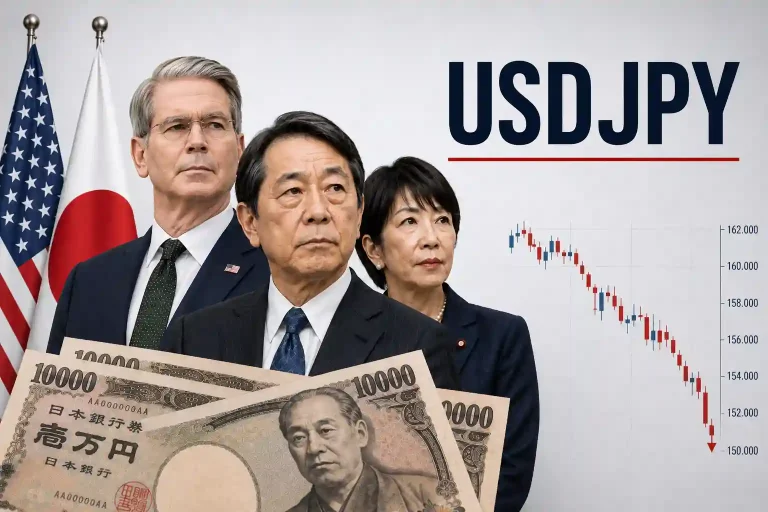
Breakout to a New High in USD/JPY: Will Japan Intervene in the Yen Currency?
 July 21, 2026 · Nitsan

USD/JPY reaches a fresh high, increasing speculation that Japanese authorities may intervene to support the yen.
The USD/JPY pair is breaking above the 162.80 area and making a new high. While buyers are celebrating the continuation of the uptrend, institutional trading desks are warning that this is a classic algorithmic liquidity sweep and the most dangerous trigger for a sudden intervention by the Japanese Ministry of Finance.
Are We Witnessing a Genuine Breakout or a Fakeout on the Daily Chart?

The technical picture on the daily chart clearly shows that the price is currently attempting to break above the upper trendline of the ascending channel. Despite the upward breakout attempt, the odds lean toward it being merely a false breakout. The entire market is on high alert, anticipating aggressive intervention by the Japanese government and the Bank of Japan, which creates potential for a violent reversal. Should the bearish scenario unfold and selling pressure intensifies, the realistic target for short sellers would be to slide downward and close the open gap remaining at the 148 price level.
Why Is This Breakout Instilling Fear Among Traders?
The movement above previous highs does not necessarily indicate clean fundamental strength, but rather an aggressive hunt for stop-loss orders of bears who entered short too early, alongside triggering buy breakout orders from traders acting out of fear of missing out. Beneath the surface, the market has entered a Russian roulette scenario.
Why Is a New High the Most Dangerous Trigger for Intervention?
The rise to a new high aggressively tests the Japanese Ministry of Finance to determine whether authorities have fallen asleep at the wheel or are waiting for the ultimate extreme point. Authorities in Japan do not like to intervene when the media predicts it in advance. They prefer to act precisely at moments like this, when the market is convinced that the undisputed uptrend will continue and overall positioning is overwhelmingly skewed in favor of the dollar.
What Does the Order Book Show at These Price Levels?
A look at the interbank order book at current price levels highlights a critical structural weakness. Market makers are scaling back positions because holding dollar inventory at these peak levels against a looming intervention threat is perceived as an unreasonable risk. As a result of a thin and sparse order book, it takes only a small rate check or an initial sell order from Tokyo to generate a rapid red candle of hundreds of pips within seconds.
When and How Is the Japanese Surprise Blow Expected to Arrive?
Should the Japanese Ministry of Finance decide to execute a flash intervention, authorities will prefer to choose time windows when global trading volumes are at their lowest, such as during session transitions between the New York close and the Tokyo open. Under these conditions, every dollar sold generates double the impact on the chart. To confirm that this is the beginning of a major bearish trend rather than just a temporary correction, the red candle will need to break down forcefully and close below the 162.00 level on the daily session.
The Bottom Line: A Calculated Bet or a Trap for the Naive?
Any leveraged long order opened above the high is a trade at maximum risk level. The market is currently stretched like a coiled spring, and the blow chosen to release it could be fast, painful, and exceptionally violent.
You may also be interested in:
USDJPY Above 161: Is Japan Approaching Another Intervention?
Suspected Stealth Intervention: The Behind-the-Scenes Drama in the Japanese Yen (USDJPY)
Disclaimer: Trading in financial markets and foreign exchange involves substantial financial risk and does not constitute investment advice, a recommendation, or a substitute for independent judgment. The author may hold long or short positions in the assets mentioned in this article.