History in Tokyo: Japanese Yen Returns to 1986 Lows, These Are Japanese Officials’ Threats of Dramatic Intervention in the Forex Market
 July 1, 2026 · Nitsan
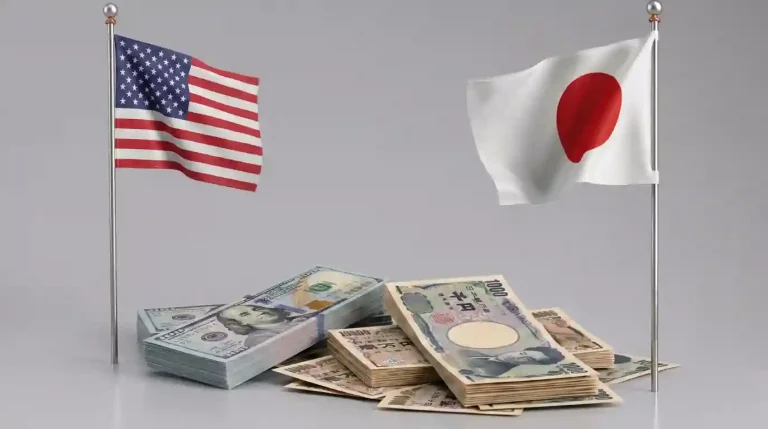
The drama in the global currency market is reaching a boiling point, as the Japanese currency records a free fall, taking traders four decades back. While technical momentum pushes the Dollar to record highs against the Yen, senior Ministry of Finance officials in Tokyo are attempting to create a highly aggressive verbal line of defense, moving between explicit threats of decisive steps and a deliberate strategy of silence designed to spook short-sellers. What exactly stands behind this historic collapse, what did the Minister of Finance promise, and why does the trading floor now estimate with a particularly high probability of seventy percent that we will see aggressive physical intervention already during the coming month?
Will the Deep Interest Rate Differential Continue to Crush the Currency?
The recent problematic reputation of the Yen stems primarily from the unimaginable interest rate differential between Japan and the rest of the world. While the Federal Reserve in the US and leading banks in Europe maintain high interest rates to curb inflation, the Bank of Japan maintains an exceptionally expansionary monetary policy and a near-zero interest rate environment. This situation fuels the carry trade phenomenon, in which investors borrow Yen at zero interest, sell it immediately, and convert it to Dollars to enjoy higher yields. This constant pressure creates a massive supply of Yen in the market, and traders take advantage of the situation and continue to pull the trigger, bringing the Ministry of Finance closer to its point of no return.
How Did Fear in the Japanese Corporate Sector Push the Price Toward the 163.00 Barrier?
Into this cauldron entered yesterday large Japanese companies as well, particularly giant importers that depend on international procurement. These companies, looking with deep concern and real fear at the continuous weakening of the local currency which makes their costs more expensive, began to execute massive Dollar hedging and purchasing transactions. This panicked move by the Japanese corporate sector yesterday created increased demand pressure that pushed the price even higher, and currently the currency pair is actively trying to test and reach the round and psychological price of 163.00.
At the same time, the price is currently encountering stiff resistance in this area. Experienced traders in the market understand very well that the price band between 162.00 and 165.00 is a potential minefield, and from it, that same aggressive intervention by the Japanese Ministry of Finance could erupt at any moment. On trading floors, it is estimated that such a move, once implemented, is expected to drop the price in the first stage to at least the 158.00 area (corresponding to the green channel area and the average lines on the chart), and from there the road may open to continued sharp declines, as marked by the red arrows, until closing the distant historic gap at the price of 148.00.
Technical View: The Daily Chart Reveals the BoJ’s Liquidity Trap

A look at the attached technical chart, “USDPY 01 07 2026 2.png”, visualizes why the current momentum is at an extreme edge point. As can be clearly seen in the chart, the price of the pair arrived directly into the upper red channel, which is defined on trading floors as the “Sell Zone”.
This red channel is not just a technical resistance line, but it currently serves as a strategic resistance area and a critical liquidity pool for the Japanese government. The market structure shows that the price is currently facing tough resistance at these levels. Experienced traders in the market understand very well that the price band between 162.00 and 165.00, represented by those red lines, is a potential minefield, and from it, that same aggressive intervention by the Japanese Ministry of Finance could erupt at any moment.
On trading floors, it is estimated that such a move, once implemented, is expected to drop the price in the first stage to at least the 158.00 area, and from there the road may open to continued sharp declines, as marked by the red arrows, until closing the distant historic gap at the price of 148.00.
How Did Finance Minister Satsuki Katayama Respond and Why Is She Involving the US?
The most recent official response came yesterday, on June thirtieth, twenty twenty-six, during a stormy press conference in Tokyo. The Japanese Minister of Finance, Satsuki Katayama, chose not to sugarcoat her messages and stated unequivocally that the government will take appropriate action in the forex market at any time required. Katayama decided to raise the tone and pulled out an explicit threat based on international cooperation. She noted that during the recent online meeting held between the finance chiefs of Japan and the US, both sides confirmed that taking decisive steps is included as a tangible option on the table. The deliberate mention of the US was intended to make it clear to the markets that if Japan decides to act, it might enjoy broad American backing and that it is not an isolated threat by a single country, which significantly strengthens estimates that the trigger is close to being pulled.
What Did the Chief Currency Diplomat Atsushi Mimura Say and When Is He Expected to Act?
In the operational arena, the person managing the daily campaign is the Vice Minister of Finance for International Affairs, Atsushi Mimura, who is considered the chief currency diplomat. In a comprehensive interview he held in public on Wednesday, June fourth, twenty twenty-six, Mimura explained that tools of physical intervention in the market are the ultimate means for sending a direct message to market participants, and warned that the government will act as soon as movements are disconnected from economic fundamentals.
Furthermore, government sources in Japan clarified in recent days at the end of June that his sharpest warning from late April is still defined as standing. In that same famous warning, published just hours before the Japanese burned a record sum of seventy-three billion dollars to boost the currency, Mimura declared that the time for decisive action is approaching and asked traders not to take their eyes off their smartphones during the holidays. Currently, Mimura is maintaining a relative silence deliberately, and analysts estimate that this is a tactic aimed at creating an element of surprise in the market, after Japan signaled too much in the previous round and gave traders time to prepare, which only increases the tension ahead of a breakout move.
Why Do the Quotes of Former Vice Minister of Finance Masato Kanda Still Guide the Market?
Another key figure who deeply influences trader behavior is Masato Kanda, the former Vice Minister of Finance who currently serves as a special advisor to the government. Although he currently maintains a lower official profile after being replaced by Mimura, his historic threats constitute to this day the central reference point for the market’s red lines.
Kanda is the one who coined the sharpest terms used by the Japanese Ministry of Finance, having previously declared that the government is on high standby and is examining the situation with a deep sense of urgency. He used to attack speculative and one-sided movements in the market and emphasized that economic fundamentals do not change by several Yen during a single night. These statements continue to echo in trading rooms, and traders use them to understand when the government might finally lose its patience entirely.
Why Is There a Seventy Percent Probability of a Dramatic Intervention This Month?
Despite the heavy machinery of verbal threats from economic leaders in Tokyo, the market continues to test the government’s boundaries with every passing hour and pushes the Yen deeper into historic low levels. However, a deep analysis of market behavior and the current pressure map shows that the current situation is simply unsustainable for the Japanese. The signs indicating cooperation with the US, along with Mimura’s planned silence and the burning need to curb the damage to local purchasing power, lead to a clear conclusion among leading entities in the forex market according to which there is a very high seventy percent chance that we will see the Japanese Ministry of Finance physically enter the arena and execute a large-scale intervention during the month of July.
Traders admittedly understand that physical intervention is merely a temporary band-aid as long as the Bank of Japan does not present an aggressive plan to raise interest rates, but reaching such extreme price levels forces the government to act to prevent a free fall, making the current month one of the most tense and critical the forex sector has known in recent years.
Risk Warning and Clarification: Trading in capital markets and foreign exchange (forex) involves high financial risk and is not suitable for every person. The data, analyses, and estimates appearing in this article, including the evaluation regarding a seventy percent chance of government intervention and the various technical targets (such as 158.00 and 148.00), represent the personal opinion of the writer only and do not constitute investment advice, a recommendation for action, or a substitute for professional advice that takes into account the personal data of each investor. The writer may hold open positions (long or short) in the assets mentioned in the article, including currency pairs related to the Japanese Yen, and may act in them at any time without prior notice. Anyone executing an action based on this content does so under their sole responsibility.