Boiling Point in Tokyo: Yen Shatters Negative Records as Japan Threatens Decisive Yen Intervention
 June 26, 2026 · Nitsan
The Japanese Yen faces a critical week as traders watch for potential intervention from Japan’s Ministry of Finance.
The boundaries of the Japanese Ministry of Finance are being stretched to the limit over the past 24 hours, putting Asian financial markets on high alert. Less than a week after the USD/JPY pair crossed the 161 threshold, the dollar’s bullish momentum persisted with full force, driving the Japanese currency to a overnight low of 161.81 in New York. This marks the lowest level for the Yen since July 2024, leaving the market just inches away from breaking a historic low unseen in nearly four decades. The current surge is fueled by a combination of robust macroeconomic data from the US, which pushes back expectations for a Fed rate cut, alongside rising global energy prices that increase the structural pressure on the Japanese economy.
Has the Finance Minister Deployed the Ultimate Verbal Warning?
In response to the unusual volatility, Japan’s Finance Minister, Satsuki Katayama, delivered a direct and extraordinary statement to reporters in Tokyo this morning. Katayama made it unequivocally clear that there is no change in the government’s stance, and that Japan stands ready to take decisive action against speculative movements in the foreign exchange market. In the language of Japanese financial diplomacy, the explicit use of the term “decisive action” is considered the highest level of warning in the verbal escalation chain, serving as the final signal before actual buy and sell orders are injected into the market.
Is the Ministry of Finance Planning a Flash Intervention?
Alongside the official warnings, market traders estimate that Japan may opt for a different operational strategy this time around compared to previous rounds. Top currency diplomat Atsushi Mimura has maintained a prolonged media silence over recent weeks. Analysts believe this is a deliberate move to create an element of surprise. In past intervention cycles, where approximately 11.7 trillion Yen was spent, the messaging was overly predictable, granting speculators ample time to close out short positions in advance. Currently, the greatest fear in trading rooms is a sudden, aggressive flash intervention occurring without any prior warning.
Is a Joint Operation Being Crafted with the US Administration?
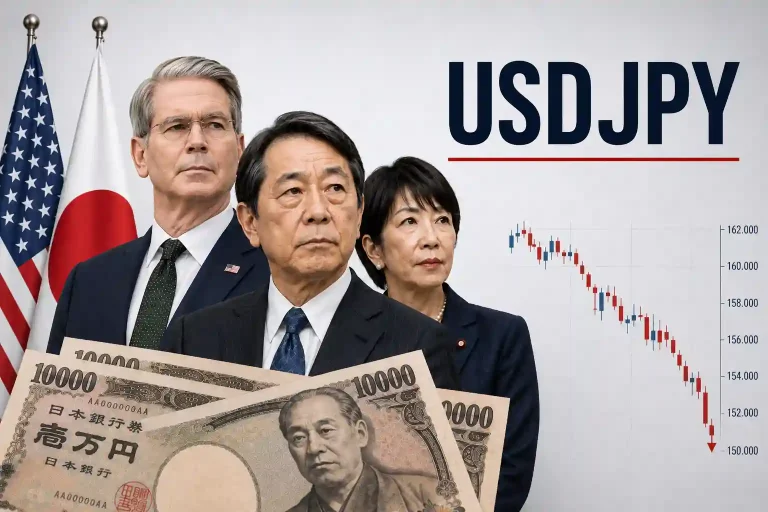
Another critical development raising red flags for traders is the apparent level of coordination with the US administration. Significant discussions were recorded in recent days between Finance Minister Katayama and US Treasury Secretary Scott Bessent. According to reports, the two agreed to tighten coordination on currency matters and expressed a willingness to take bold steps if necessary. A joint, coordinated action by both central banks would serve as a far more powerful tool than a unilateral intervention by Tokyo, reinforcing the market assessment that the 162 level is marked as a strategic red line.
How are Inflation Data Impacting the Central Bank’s Decision?
Simultaneously with the foreign exchange market tensions, Consumer Price Index (CPI) data for the Tokyo region—a leading indicator for the country as a whole—was released this morning. The data shows inflation accelerating to a rate of 1.6%, and holding steady at 1.9% when excluding fresh food and energy. These figures highlight the dilemma facing policymakers, as the weak Yen continues to drive up import costs and filter price increases into the domestic economy. This situation intensifies the pressure on the Bank of Japan to stick to its path of interest rate hikes, regardless of any emergency steps taken by the Ministry of Finance.
Is the Upper Trendline the Reversal Point?
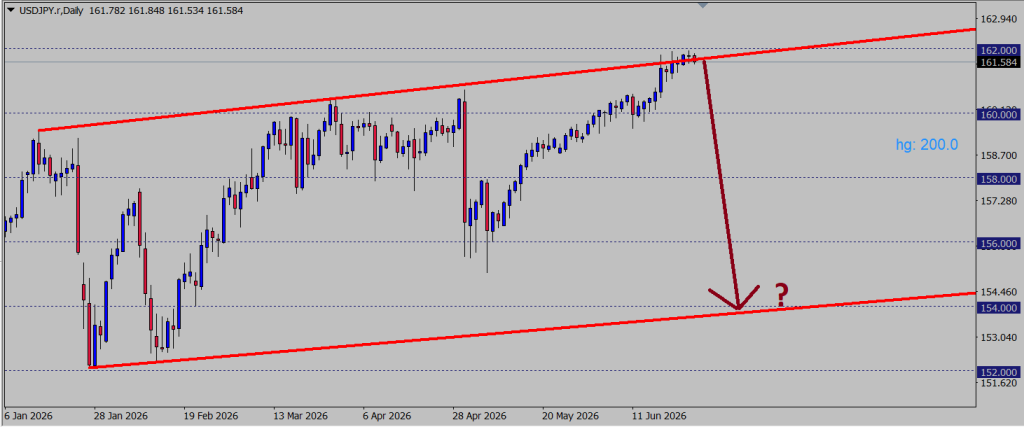
A look at the daily chart in the file USDJPY 26 06 2026.png presents a fascinating technical picture that aligns almost perfectly with the fundamental drama. The price is currently testing the upper trendline of the broad ascending channel, which serves as a highly rigid technical resistance level. Should this significant technical resistance be coupled and integrated with a physical intervention by the Japanese Ministry of Finance, we expect the price to react aggressively and drop sharply toward the lower trendline of the pattern. A breakdown below the lower trendline could trigger a snowball effect, from which the price could potentially continue falling to fill the open price gap left behind in the 148 area.
Disclaimer: Foreign exchange trading in general, and the USD/JPY pair in particular, involves exceptionally high risk and is not suitable for every investor. The analysis presented in this article represents the personal opinion of the author alone and does not constitute a recommendation, investment advice, or a substitute for independent judgment. The author may hold long or short positions in the aforementioned currency pair or related financial assets, and may alter their position at any time without prior notice.